


The Wellbeing of Play
Recently, I led a really joyful session at Altrincham United Reformed Church as part of my Tuesday wellbeing sessions. I called it The Wellbeing of Play.
It was obvious how enthusiastic about this topic I was from the fact that, in the run up to the session, I could not stop thinking about it and getting excited about what might emerge. I kept wondering what play meant, what I might say to people, and how we might explore it together.
Then, on the day itself, it was very, very hot. I felt like a melting candle, and like my brain was on strike. For example, on the way there, I saw a sign in the road that said “Report of Debris”, but I swore it said “Report of Deer”. I had a little chuckle to myself imagining deer escaping from Dunham Massey and somehow making it all the way to the motorway. I thought, “That is quite a long way for them to come!” Then I had another little chuckle when I realised my mistake.

During the session, I kept misspelling things and mishearing things. At one point, as I was miswriting things on the board while we mind-mapped the topic of play, grandchildren became gratitude, jouer became Juliet, and someone muttered, “she's got heat stroke.” Without meaning to, I then wrote “heat stroke” on the board as part of the brainstorm about play. That made me laugh too.

In other days, in other circumstances, I might have felt like these events meant things 'went wrong' somehow, but that day turned out to be a really good example of how play can be a way of perceiving the world and responding to life.
I was hot, tired, and had the cognitive equivalent of scrambled eggs, but I was also in a playful mood, staying light and flexible enough in the moment to laugh at and enjoy myself. I feel safe and supported with my colleagues at the hub, plus I have co-created a group that I can relax with. I loved the topic and felt so enthusiastic about it. All of this meant I was able to let go of the shoulds of my plan and go with the flow and so it ended up being one of the best sessions I have ever experienced, even though, or partly because, I kept messing up.

During the session on play, we talked about the kinds of play we enjoyed as children, and whether those ways of playing had stayed with us or changed. I loved how much insight came out of that. One person shared that they found childhood lonely, and tough, but learned to enjoy play more once their children, and then grandchildren, came along. That was very moving for us to hear and for them to reflect on.
Another person reflected on enjoying team games as a child and realised that this connected with being a good team player later in life, with much of their career involving working as part of a team. That also got me, because it says something important about play as a place of learning. The things we are drawn to in play may not be random. They might show us strengths, needs, patterns and ways of being that continue into adult life.

Though we started off with quite a philosophical chat, gradually, as associations appeared, memories were stirred and little coincidences made people laugh, the group started to warm up. We gave each other permission to play. Towards the end, someone said it was almost like the mind needs a warm-up. This made me think, maybe imagination does need a warm-up. Maybe play needs a bit of safety around it. Maybe adults need to edge towards it through memory, conversation, humour, mistakes, objects, stories and permission.

I think I am so passionate about play because there was not much room for it in how I went about teaching, or perhaps more honestly, I did not always permission it enough in myself.
There was a bit of a war with myself going on. Though I have a very playful, creative side, because I really wanted to do a good job, and because I had internalised certain ideas about what being a good teacher meant, I did not always allow that side of myself to come out as much as it needed to for my own mental health.
I cared deeply about the children. I wanted to be professional. I wanted to keep control of the classroom, be organised, hit the success criteria, and make sure the children could hit their success criteria too. All of that mattered, but carrying it all so heavily took a lot of energy and weighed me down emotionally. I can see now that when I am not creating enough, part of me gets left like a really big, energetic dog that needs exercising. When it doesn’t get that exercise, it’s a bit like I’ve left it alone in the house until it has chewed up the sofa of my mind.
The teachers and leaders I have always respected the most often retain their sense of play. They can stay a bit looser and respond to what is happening in the room. They can use humour and imagination without everything becoming chaotic. I am not talking about messing about all the time. I mean keeping a kind of aliveness in the work.
That feels even more important in a system where play and creativity can be squeezed from life in a bid to make productive, successful students and workers. The irony is that play helps us stay engaged and shine in our own unique ways.
This isn't a hopeful statement or theory for me anymore, it's a deep knowing based on an accumulation of evidence. Since leaving teaching, it has felt almost like the lid came off a toy box in my mind. Inside it were all these different possibilities I had stored away.
Now, when people ask me what I do, I often say, “I make stuff up,” because that is what I am doing. I am playing.
Since I finished teaching, I have become a radio presenter, podcast trainer, walking for wellbeing leader, mindfulness teacher, artist, community facilitator, storytelling host, wellbeing practitioner, social enterprise director, creative workshop leader, and probably several other things I have forgotten. There are honestly so many things I have done that I cannot remember them all. I think I am writing this blog partly to help me make sense of it.
More recently, I have started selling my art online and at markets. Part of this has involved me creating games and other resources from my artwork. Making art and this other stuff totally absorbs me. Time disappears. I have followed ideas because they interested me, and some of them have turned into real things.


I have come to understand that we have to recreate areas where play is allowed, because we have internalised so much around work, usefulness and seriousness. We also have quite twee ideas about play, almost like we have watched films and adverts of what humans are like and forgotten to look around at actual humans.
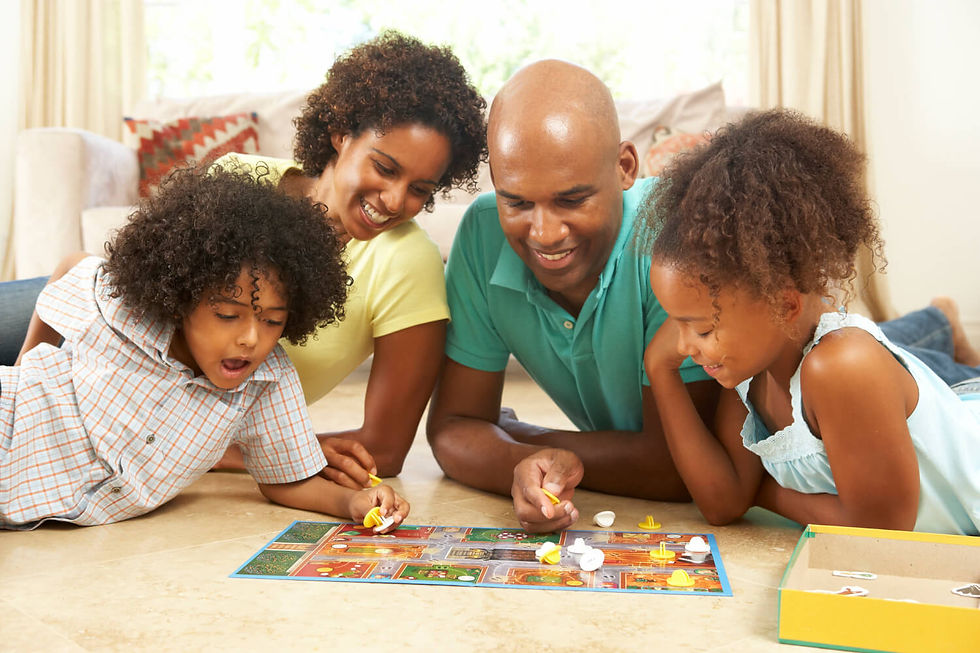
For example, we imagine play and creativity as something only children or specific kinds of people do, rather than something I believe is part of our nature. Some psychological approaches, including IFS, talk about us having different parts of ourselves. That makes sense to me here. I think many of us have playful, curious, creative parts that are still there, even if they have been pushed aside, judged, or told to behave.

We also often see children potrayed as light, free, spontaneous and joyful when they play. But when I think back to being a child, and when I think about the children I have taught, that does not feel true.
Play can be a very serious business. Children concentrate when they play, make rules, break rules, test each other and themselves, repeat things, build worlds, get frustrated, fight or appease, negotiate, repair, challenge themselves, practise and imagine. They are not always being carefree. Sometimes they are doing deep work in the only language available to them and in a form that can hold together their abundance of energy.

Play is one of the ways we learn and explore. It can be full of rules, or it can completely lack them. It can be social or solitary, silly or focused, light or intense. It is a field of experience and expansiveness that can be accidentally productive.
My husband Pat is an incredibly playful person in terms of his willingness to try things out, think, laugh at himself, and be in the moment. His playfulness and humor are one of the main reasons I fell in love with him. So, bearing all this in mind, I asked him what his summary was. Initially, he said, “I don’t have one.” (Part of what makes him playful is sometimes his unwillingness to pin things down in words!) But then he went quiet for a while and said:
“Play is dropping what we are told things should be, or how we think things should be, and finding out what’s possible.”

That feels like a good summary of what I was trying to say in this blog—that play is characterised by curiosity, flexibility, creativity, and possibility. It is a dropping of roles and performance, and an immersion into evolution and experience. It looks different for everyone, but it's within us all in its own unique combination of ways.
I would love to hear your thoughts on this topic for an upcoming Joy Ethic Show.
You can answer one or more of these questions:
Does any of this resonate with you, or not?
What has play meant to you?
What does play mean to you now?
What kind of “player” are you?
Do you give yourself permission to play as much as you would like?
Please submit any voice notes to me via WhatsApp, if you have my number, by next Friday 3rd July, or email me at jolene.joyethic@gmail.com. I will do my best to weave them together to create something that shows what play really means to us, not what it's supposed to be.


Comments